Rigging
Skin weights
How the mesh is bound, which solver to use, and why seams cause tearing.
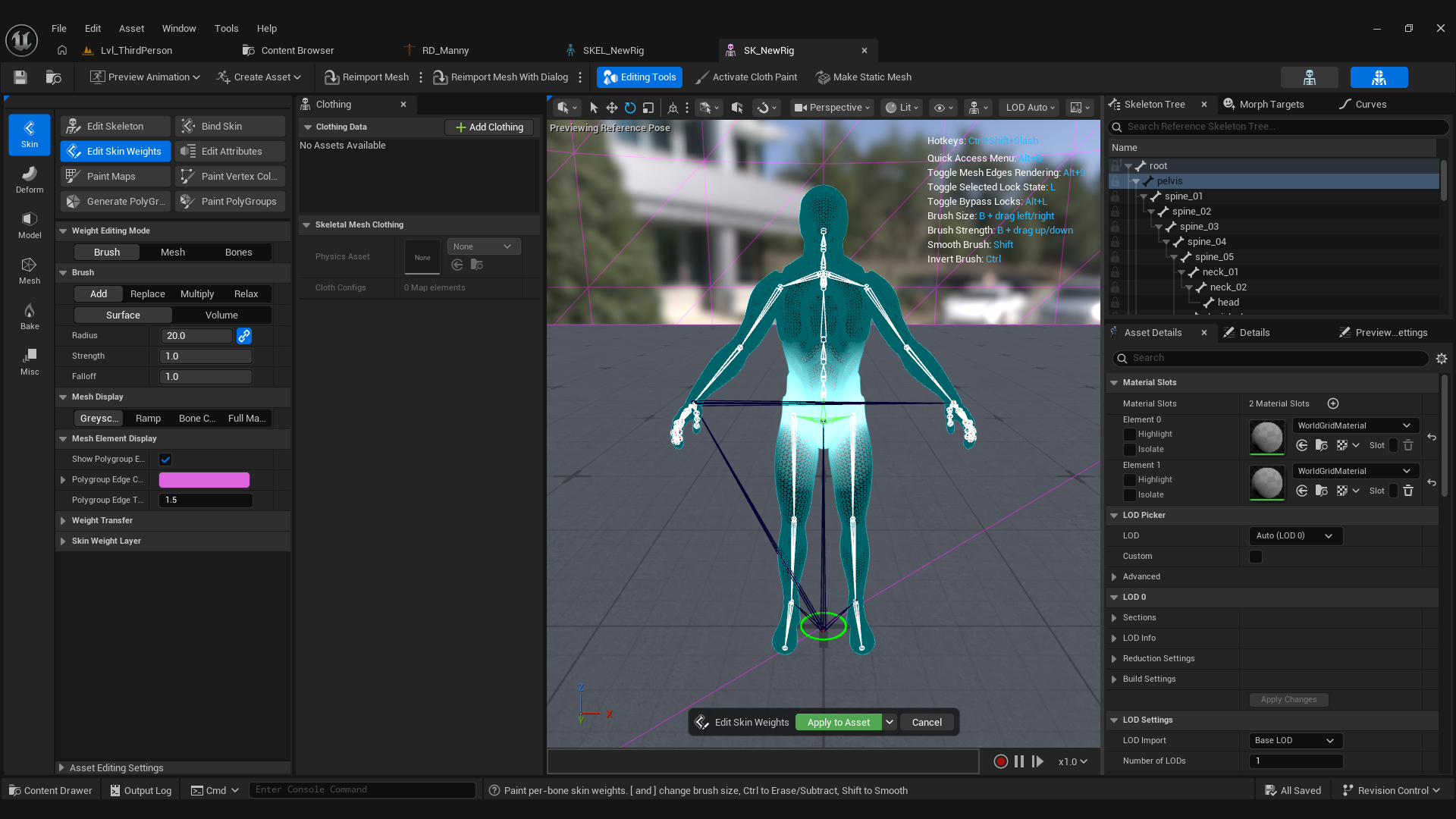
Once the skeleton is fitted, the mesh has to be bound to it. This is where a rig usually goes wrong, so it is worth knowing what RiggingCore does.
Template transfer (default)
The default method reshapes the already weighted Manny mesh onto your fitted skeleton, then copies its weights over with Unreal's own FTransferBoneWeights, filling in the gaps where the two meshes do not line up.
It is the best method for a Manny-compatible rig, because the weights come from a mesh that was authored by hand for this exact skeleton.
Dem Bones (experimental)
EA's Dem Bones is available as an alternative, driven with generated poses. In testing it made the transferred weights worse rather than better, so it is off by default. Template transfer beat it at every joint measured.
Use it only if template transfer gives you something you cannot fix.
Seam welding, and why your mesh used to tear
A UV seam or a hard normal split puts two vertices at the exact same position. They are not joined by a triangle edge, so any solver that weights each vertex on its own can give them different weights, and they fly apart the moment you pose the mesh.
Before binding, RiggingCore welds the duplicate vertices that sit on the same spot (FMergeCoincidentMeshEdges) so every point on the surface is a single vertex with a single weight. The UV and normal seams are kept on the side, so the mesh still looks exactly the same.
On the mannequin that merges around 5,000 seam edges and drops the number of coincident pairs with mismatched weights from nearly 2,000 to zero.
The full story is in The Skin-Weight Bug That Survived Six Solvers.
Head weight cleanup
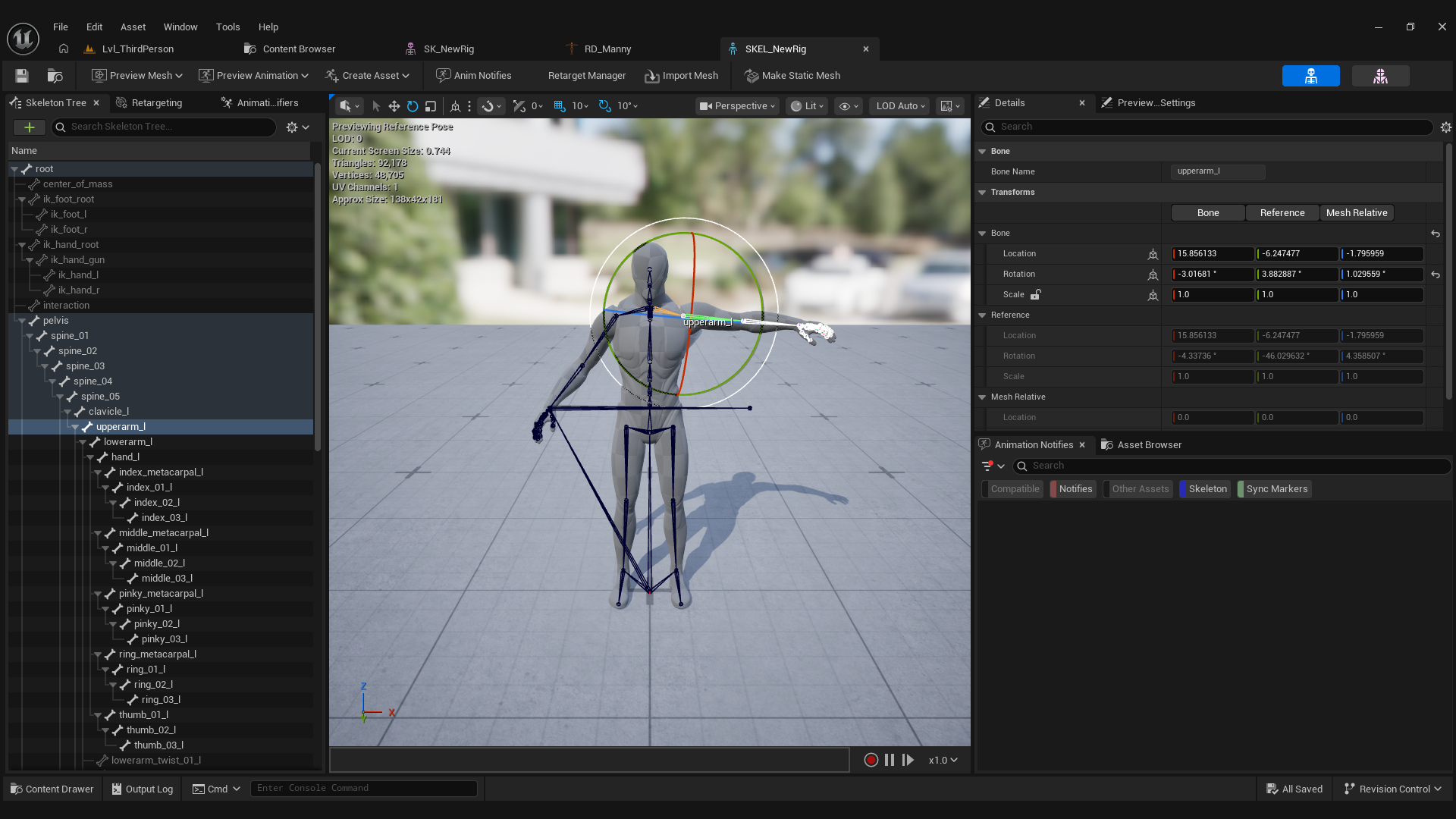
Spine weight tends to bleed all the way up into the skull, which leaves half the head behind when you turn it. RiggingCore runs a pass that moves that weight onto the neck and head bones, blended by height so it does not create a new seam.
If it still tears
See Troubleshooting.